

In short: the same skill that makes a good radio interviewer —> staying silent after a question so the guest keeps talking —> is what separates a confident voiceover or video edit from a nervous one. Amateur reads rush to fill every gap; experienced broadcasters know a well-placed pause makes the next line land harder. It's a pacing instinct built from years of live radio, not something you can fake with a good voice alone.
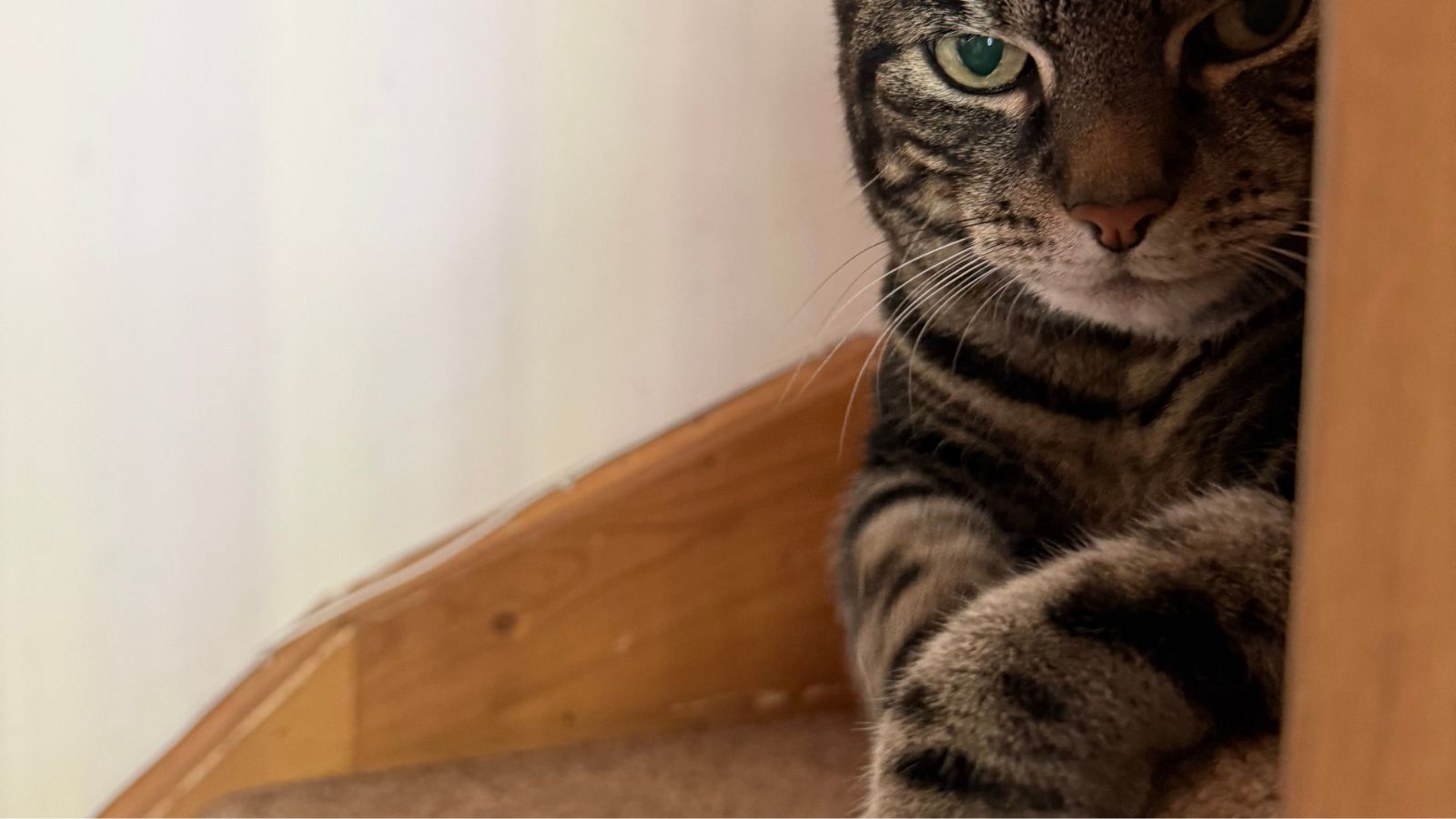
Norman does not rush.
He will sit at the top of the stairs for a full minute before deciding whether the jump down is worth his time. He will not be hurried into it. He will not perform urgency he doesn't feel. And when he finally goes, it's because the moment was right, not because I was standing there tapping my foot.
I think about Norman more than I probably should when I'm editing a voiceover read. Because the thing that separates a broadcaster from someone who's just good with a microphone isn't the voice. It's knowing when to shut up.
The trick nobody tells you about interviewing
Years in radio taught me something that sounds almost too simple to be useful: when you ask someone a question, don't fill the silence that follows it.
Every instinct in a normal conversation pushes you to rescue a pause. Someone answers, there's half a second of quiet, and your brain screams say something, anything, make this less awkward. Most people cave. They jump in with a follow-up, a comment, a reassurance — anything to close the gap.
Don't.
Sit in it. Let the silence stretch a beat longer than feels comfortable. Nine times out of ten, the person you're interviewing will do exactly what Norman does at the top of the stairs — they'll wait, weigh it up, and then go further than they meant to. They'll add the detail they'd decided not to mention. They'll qualify the safe answer with the honest one. They'll fill the silence for you, and what comes out the second time is almost always better than what came out the first.
That's not a trick you learn from a media training PDF. It's something you only really learn by doing hundreds of live interviews and watching, in real time, what happens when you resist the urge to talk.
Key takeaway: silence isn't dead air —> it's the thing doing the work, whether you're drawing a fuller answer out of an interview guest or letting a line land in a voiceover read.
The same silence, pointed at a microphone instead of a guest
Voiceover and video work is the same instinct running in reverse.
An interview is about creating a silence that draws more out of someone else. A voiceover read is about placing a silence that lets something land in your listener. Both are about resisting the amateur reflex to keep the sound going.
Listen to a nervous or inexperienced read and you'll hear it immediately: no daylight between sentences, no breath, no beat before the line that's supposed to matter. Everything delivered at the same relentless clip, because the person behind the mic —> consciously or not —> is scared of dead air. It feels like a mistake. It feels like something's gone wrong.
It hasn't. The pause is the read doing its job.
The line that lands is very rarely the line that's said loudest or fastest. It's the one with half a second of space in front of it, so your brain has time to register that something's about to matter. It's the edit that lets a shot breathe for a moment before the cut, instead of stacking everything wall to wall because more footage feels like more value. Restraint reads as confidence. Confidence reads as trust. And trust is, ultimately, what you're selling when a brand puts its voice in someone else's hands.
Why this is a genuine differentiator, not just a nice idea
Anyone can be taught to speak clearly into a microphone. Fewer people have spent decades in live radio, learning under real pressure exactly how long a silence can run before it becomes uncomfortable — and exactly how useful that discomfort is.
That instinct doesn't switch off when you leave the studio. It's the same judgement call whether I'm sitting across from a guest who's about to say more than they planned to, or sitting in an edit suite deciding whether a shot needs one more second before the cut. It's pacing, and pacing is not a technical skill you pick up from a tutorial. It's a feel, built from hundreds of hours of live, unforgiving, no-second-takes broadcast — the kind where if you get the silence wrong, everyone hears it.
Norman doesn't know any of this, obviously. He just knows that rushing the jump is how you land badly. Turns out he's right about voiceover too.
FAQ
Why does silence matter in voiceover work? A pause before a key line gives the listener a moment to register that something's about to matter. Reads without any space between sentences tend to sound nervous rather than confident, because every line is delivered at the same relentless pace.
What does radio interviewing have to do with voiceover pacing? Both rely on the same instinct: resisting the urge to fill silence. In an interview, staying quiet after a question encourages the guest to say more than they'd planned. In a voiceover or video edit, a well-placed pause makes the next line land harder. It's the same judgement call, pointed in opposite directions.
Why does broadcast experience matter for pacing? Pacing isn't a technical skill you can learn from a tutorial — it's a feel built from live, unforgiving broadcast work, where getting the timing of a silence wrong is heard immediately. Decades of live radio builds that instinct in a way a good voice alone doesn't.